
What Is a Dental Bone Graft and Who Needs One?
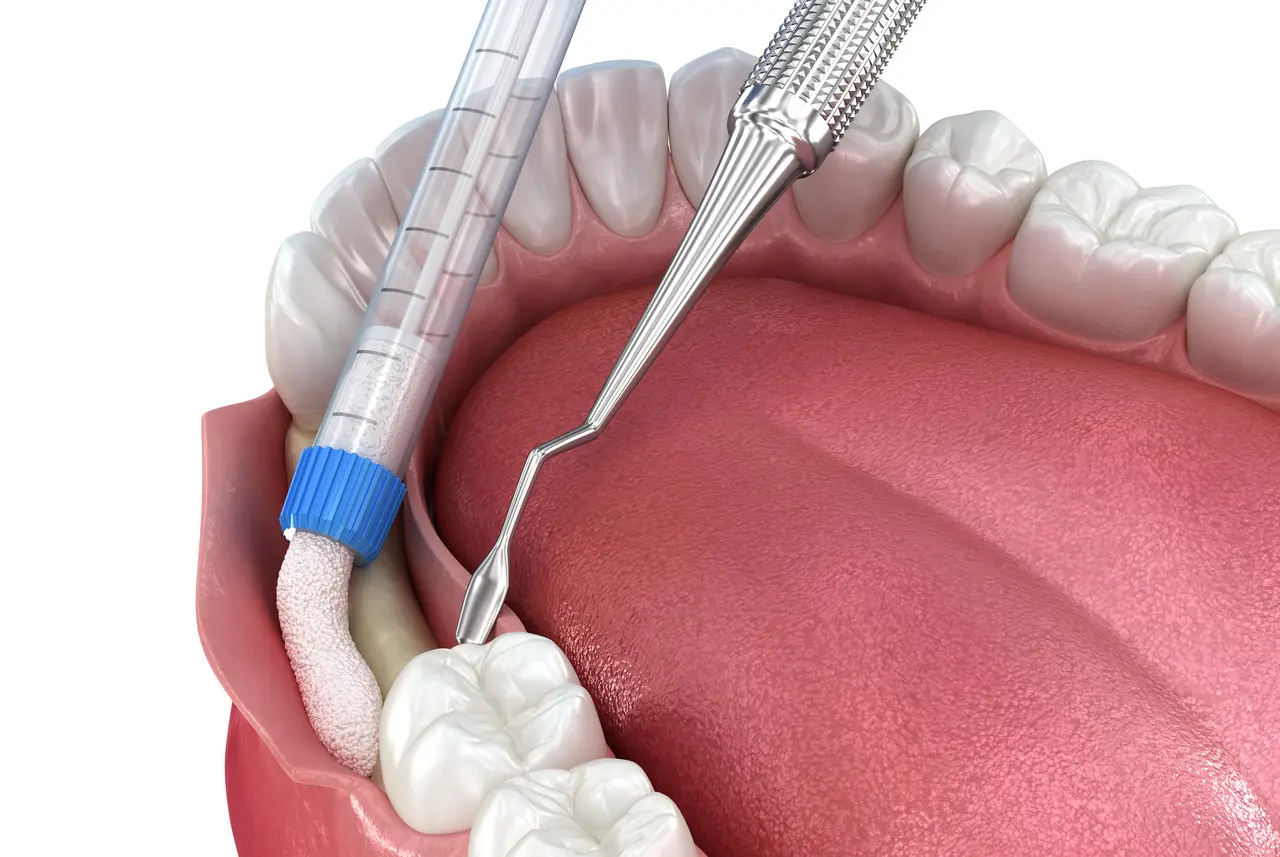
A bone graft dental Decatur GA is a procedure that adds bone material to an area of your jaw where bone has been lost. The graft acts as a scaffold, encouraging your own body to regenerate bone over time. This rebuilt bone then provides a strong foundation for a dental implant.
Common Reasons Bone Loss Occurs
Bone loss in the jaw can happen for several reasons:
- Tooth loss or extraction: When a tooth is removed, the bone that once supported it begins to shrink because it no longer has a root to hold it in place.
- Gum disease: Advanced periodontitis can damage the bone that supports teeth, leading to gradual loss.
- Injury or trauma: A blow to the face can fracture or damage jaw bone.
- Untreated tooth loss: Waiting too long after losing a tooth gives bone more time to resorb.
How We Use CBCT Imaging to Assess Your Jaw Bone
At Signature Smiles Studio, we never rely on standard X-rays alone for implant planning. Our CBCT (cone beam computed tomography) scanner creates a 3D model of your jaw. This lets Dr. Spaulding measure bone density, volume, and shape with millimeter accuracy. You know exactly where you stand before any treatment begins. No surprises.
Why Bone Grafting Matters for Implant Success
Your implant needs enough healthy bone to fuse with, a process called osseointegration. Without adequate bone, the implant cannot anchor properly. Grafting first makes implant success far more predictable.
What Happens If You Skip Bone Grafting When It's Needed
If you proceed with an implant without enough bone, the implant may fail to integrate or loosen over time. Bone loss will continue, narrowing your options for future restoration. The window for getting a secure implant shrinks as bone resorption advances. Grafting now preserves your candidacy for the long term.
Ridge Augmentation: Restoring Jaw Volume for a Predictable Outcome
Ridge augmentation is a type of bone graft used when the jaw ridge has flattened or narrowed after tooth loss. By rebuilding the ridge height and width, we create a solid foundation for one or more implants. This technique is especially helpful for patients considering full arch restoration.
Bone Grafting vs. Proceeding Without Adequate Bone Volume
Choosing to graft first, or skip it, affects your outcome in several ways. Here is a clear comparison.
| Feature | Bone Grafting First | Skipping Grafting |
|---|---|---|
| Implant eligibility | Restored or confirmed | May be disqualified |
| Long-term implant stability | High | Significantly compromised |
| Bone loss progression | Halted with graft + implant | Continues over time |
| Treatment timeline | Longer, but predictable | Shorter initially; higher revision risk |
| Candidacy window | Preserved | Narrows as resorption advances |
If you have been told you need a graft, it is usually because your bone volume is too low for a reliable implant. Skipping that step can lead to failed implants and more complex corrections later. Adding the graft gives you the best chance for a lasting result.
What to Expect: Your Bone Grafting Procedure Step by Step
Initial Consultation and CBCT Scan
Your first visit begins with a conversation about your goals and a thorough exam. Dr. Spaulding will review your CBCT images and explain whether you need a graft, why, and what to expect from the timeline. She will answer every question without rushing.
The Graft Procedure: What Patients Experience
The graft is performed in our office under local anesthesia. If you feel anxious, we offer nitrous oxide (laughing gas) to help you relax. A small incision is made in the gum, and the graft material is placed into the bone defect. The gum is then sutured closed. The procedure typically takes 30 to 60 minutes, depending on the size of the graft. Most patients report only mild discomfort afterward.
Healing, Timeline, and Next Steps Toward Your Implant
Healing takes about 3 to 6 months. During that time the graft material integrates with your natural bone. Follow-up scans confirm when the bone is ready for your dental implant. For patients needing multiple implants, such as implant-supported dentures or implant overdentures, ridge augmentation may be part of the same plan.
Frequently Asked Questions About Dental Bone Grafting in Decatur
How long does a dental bone graft take to heal before implant placement?
Healing typically takes 3 to 6 months after the graft procedure. During that time the graft material fuses with your natural bone. Dr. Spaulding monitors your progress with follow-up imaging to confirm the bone is ready for implant placement.
Is bone grafting covered by dental insurance?
Coverage varies by plan. Many dental insurance policies include bone grafting when it is needed for a covered implant procedure. Our team can check your benefits and explain any costs. Visit our Insurance & Financing page for details on accepted plans including Aetna, Cigna, Guardian, MetLife Dental, and Sun Life Financial.
Will I need a bone graft before every dental implant?
Not necessarily. If you have healthy jaw bone with adequate volume, you may not need a graft. Dr. Spaulding uses CBCT imaging to measure your bone precisely and recommends grafting only when it is needed for long-term implant success.
What types of bone graft material are used?
We use safe, well-studied materials. Options include synthetic bone (alloplast), donor bone (allograft), and in some cases your own bone (autograft). Dr. Spaulding will discuss which type is best for your situation based on the size of the defect and your health history.
Is the bone graft procedure painful?
The procedure itself is done under local anesthesia so you should not feel pain. Most patients report mild soreness for a few days, which is managed with over-the-counter pain relievers. We also offer nitrous oxide sedation for extra comfort during the procedure.
Dr. Jocelyn Spaulding's advanced implant training (including study at the Pankey Institute, Spears Institute, and the Dental College of Georgia master implant course) means your graft and implant are planned with exceptional precision. She uses CBCT-guided planning to ensure every step is based on your unique anatomy. Learn more about Dr. Spaulding's credentials.