
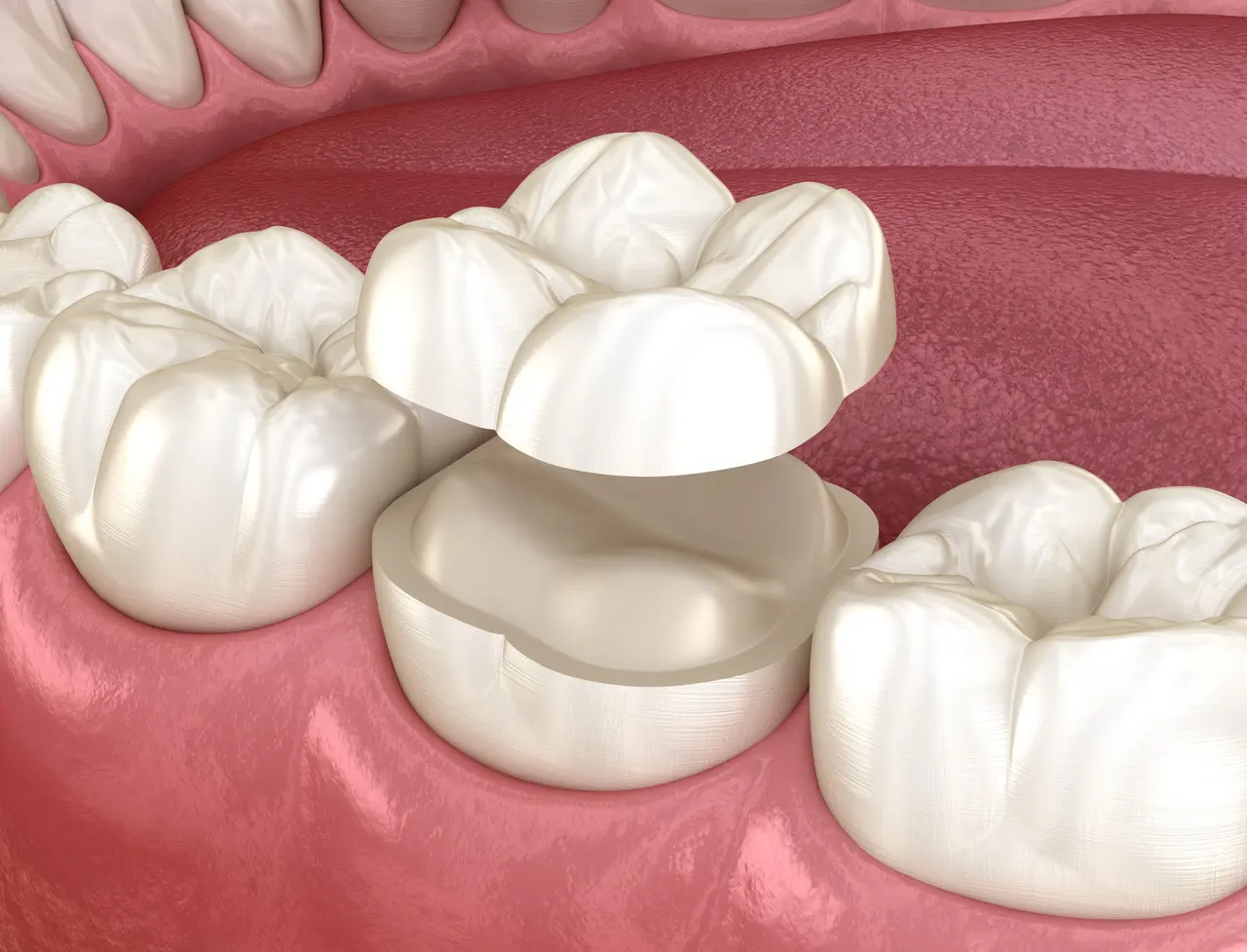
What Are Inlays and Onlays?
Inlays and onlays are custom-made restorations that repair a tooth with moderate decay or damage. Unlike a traditional filling that is molded directly onto the tooth, an inlay or onlay is fabricated in a dental lab — or right in our office using our digital workflow — and then bonded into place. Both are considered "indirect" restorations because they are made outside your mouth.
Inlays fit within the grooves (cusps) of the tooth, while onlays extend to cover one or more cusps. This makes onlays a good choice when the damage is slightly larger. Both are tooth-conservative: your dentist removes only the damaged area and preserves as much healthy structure as possible. The materials used are typically porcelain or ceramic, which gives a natural look and strong durability. That is why many patients search for a porcelain inlay Decatur GA when they want a restoration that blends with their smile. For smaller cavities, dental fillings are a good option, but when the damage is larger, inlays and onlays offer better strength.
Inlay vs. Onlay — What's the Difference?
The main difference is how much of the tooth they cover. An inlay fits entirely inside the chewing surface (between the cusps). An onlay covers one or more cusps and sometimes the entire biting surface. Think of an inlay as a filling that fits inside the tooth, and an onlay as a partial crown. Both preserve more natural tooth than a full crown, making them a preferred choice when the damage is moderate.
Benefits of Choosing an Inlay or Onlay
Inlays and onlays offer several advantages over other restorations:
- Preserve healthy tooth. Because only the damaged part is removed, your natural tooth stays strong.
- Strong and long-lasting. Porcelain and ceramic inlays/onlays can last 10–30 years with proper care.
- Precision fit. Using digital impressions (iTero scanner) and CAD/CAM design, the restoration fits snugly and comfortably.
- Natural appearance. The material mimics the look and feel of your natural enamel.
- Single-visit convenience. With our in-office technology, we can create and place your restoration in one appointment.
What to Expect at Signature Smiles Studio
The process is straightforward and comfortable:
1. Consultation. Dr. Spaulding examines the tooth and takes digital X-rays. She discusses your goals and determines if an inlay or onlay is the best option.
2. Digital impression. Instead of messy putty, our iTero scanner captures a 3D model of your tooth in seconds.
3. Design and fabrication. Using our CAD/CAM system, we design the restoration and mill it from a solid block of ceramic or porcelain. This takes about an hour.
4. Placement. We bond the restoration using a strong adhesive and make any final adjustments for a comfortable bite.
Throughout the appointment, you can relax with amenities like cushioned chairs, private treatment rooms, and even a visit from our therapy dog if you request one. Dr. Spaulding takes her time to make sure everything fits precisely and feels natural. Our advanced technology such as digital impressions and CAD/CAM fabrication ensures a precise fit.
Frequently Asked Questions About Inlays & Onlays
Are inlays and onlays covered by dental insurance?
Many dental insurance plans cover inlays and onlays as a basic restorative procedure, similar to a crown. Coverage depends on your specific plan. We accept Aetna, Cigna, Guardian, MetLife, and Sun Life Financial. Our team can verify your benefits before treatment. Learn more about insurance and financing.
How long do inlays and onlays last?
With good oral hygiene and regular checkups, inlays and onlays typically last 10 to 30 years. Their durability depends on the material used, the location of the tooth, and how well you care for it. Dr. Spaulding uses high-quality ceramics designed to withstand normal chewing forces.
Is the procedure painful?
No. We use local anesthesia to numb the area, so you should feel no pain during the preparation or placement. Afterward, some mild sensitivity is normal for a few days. If you feel anxious, we offer nitrous oxide sedation and a calming environment. Our team checks on you throughout the visit.
Can an inlay or onlay replace an old filling?
Yes. Inlays and onlays are often used to replace worn-out or failing fillings, especially when a filling has cracked or the tooth has fractured around it. The inlay or onlay provides a stronger, more precise fit and may last longer than a replacement filling.
If you are considering inlays and onlays in Decatur, GA, we invite you to visit Signature Smiles Studio. Dr. Spaulding will assess your tooth and recommend the most conservative restoration that restores your smile and protects your oral health. Schedule your appointment online or call our office today.